Getting to know Virginia Woolf: life, work and why she still matters
Why is Virginia Woolf my favourite author, and why do I wish I could sit down with a cup of tea and chat with her for hours? I'm so glad you asked.
Let me start from the beginning. I first heard about her in English class. She was just one author among many, if not for the fact that she was one of the very few women in the curriculum. Yet something clicked. There are writers who change the way you see everything, and Virginia Woolf is definitely one of them.
Having had the chance to learn all about her, I strongly believe that understanding her story, her thoughts and her philosophy plays a huge role in understanding her work. And it would be such a shame to miss out on experiencing her art to the fullest.
So let me be the one to introduce you to this incredible woman and fantastic writer. Think of this as less of a biography and more of an invitation to her life, her work, her circle, her legacy, and why picking up one of her novels in 2026 still feels like exactly the right thing to do.
Who was Virginia Woolf?
Virginia Woolf was born Adeline Virginia Stephen in London in 1882, into a literary and intellectual family. Her father, Leslie Stephen, was a prominent critic and editor. Her mother, Julia, died when Virginia was thirteen, a loss that never really left her and that surfaces, in one form or another, throughout her fiction.
She grew up surrounded by books, ideas and some of the most influential thinkers of late Victorian England. She was largely self-educated, reading voraciously from her father's library while her brothers were sent to Cambridge. That gap between what was handed to men and quietly withheld from women became one of the things she spent her whole life writing about. And rightly so, if I may so say myself.
In 1912 she married Leonard Woolf, a writer and political thinker, and together they founded the Hogarth Press in 1917, a small publishing house that went on to publish some of the most important literary works of the twentieth century, including the first English translations of Sigmund Freud.
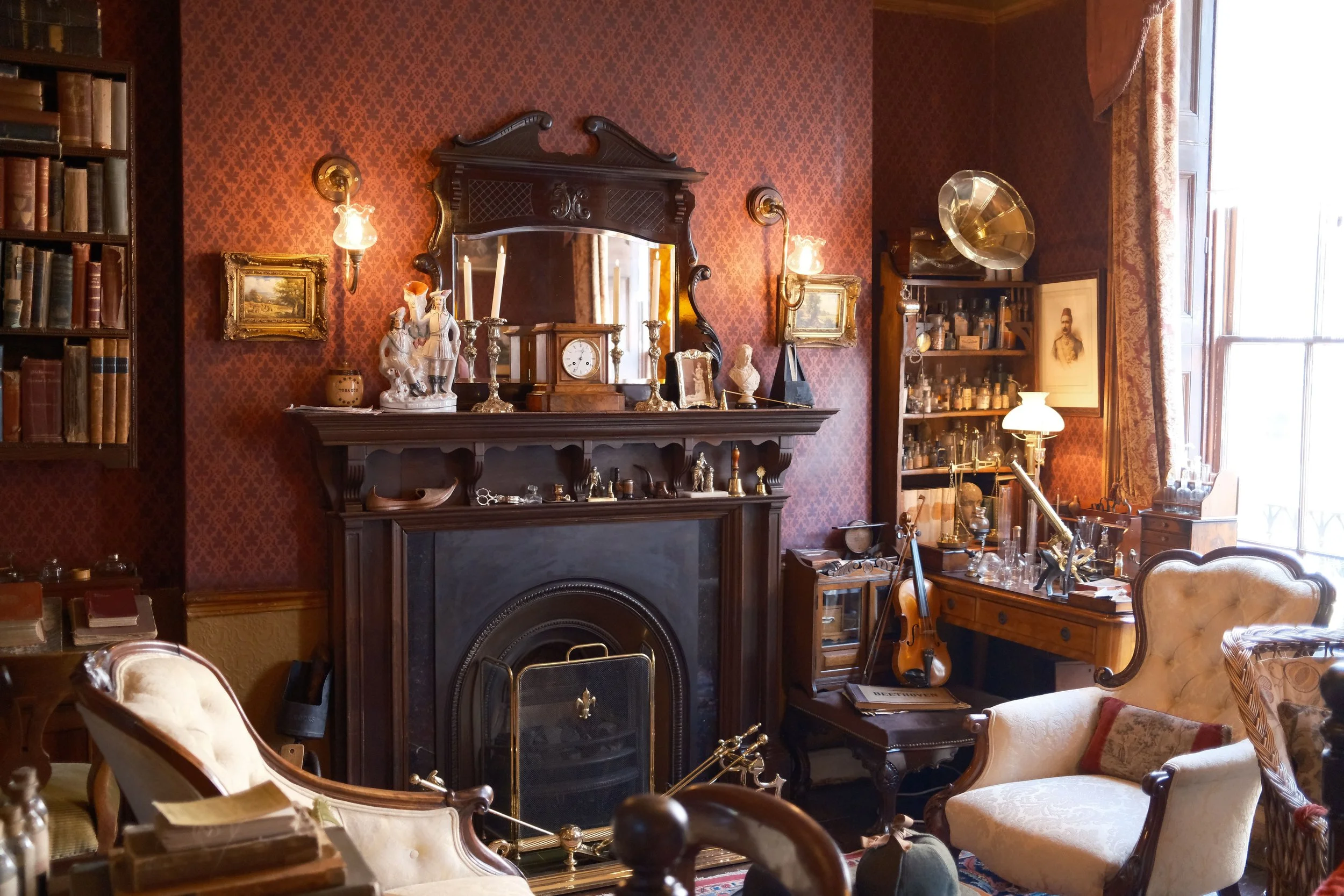
Photo by Mingyang LIU on Pexels
The world Virginia Woolf wrote in
To understand Woolf's work, it helps to know a little about the world she was living in. Late Victorian and Edwardian England had very clear ideas about what women could and couldn't do, and writing serious literature, engaging in intellectual life, being taken seriously as a thinker? Not really on the list.
She wrote anyway. And not just wrote, she completely changed what a novel could be. At a time when fiction was mostly plot-driven and chronological, she turned inward, following the thoughts and feelings of her characters through a single day, an afternoon, a moment.
Virginia Woolf and The Bloomsbury Group
No introduction to Virginia Woolf is complete without the Bloomsbury Group: a loose collective of writers, artists, intellectuals and thinkers who gathered, argued, ate, fell in love with each other and changed British cultural life in the early twentieth century. They believed in art, friendship, honesty and the free exchange of ideas. Among them: the economist John Maynard Keynes, the art critic Clive Bell, the painter Vanessa Bell (Virginia's sister), the biographer Lytton Strachey, and the novelist E.M. Forster.
Who Influenced Virginia Woolf
Her first influences came from her father's library: Thomas Hardy, George Eliot, Henry James. James in particular left a mark. His obsession with what characters think and feel rather than what they do planted a seed that Woolf would go on to grow into something entirely her own.
Then came the Russians. Chekhov and Dostoevsky, encountered through early translations in the 1910s, opened something up for her: their psychological depth, their comfort with ambiguity, their willingness to leave things unresolved.
And then her contemporaries. Proust, whose exploration of memory and time runs almost parallel to hers. And Joyce, whose Ulysses was published the same year as Mrs Dalloway.
Virginia Woolf’s work
And now, the moment we've all been waiting for.
Virginia Woolf wrote nine novels, two book-length essays, and a vast body of criticism, diaries and letters over the course of her life.
Reading her work is a specific experience. She doesn't tell you what to think or how to feel. She doesn't wrap things up neatly. What she does instead is take you inside several minds at once and trust you to follow. Once you get used to that, it's one of the most immersive reading experiences there is.
Here are the ones I'd start with, and what to pay attention to when you read them.
Mrs Dalloway (1925)
A single June day in London. Clarissa Dalloway, a politician's wife, is preparing for a party she's hosting that evening. On the other side of the city, Septimus Warren Smith, a shell-shocked veteran of the First World War, is unravelling. The two never meet. And yet the novel holds them together, moving between their minds with extraordinary fluidity.
Virginia Woolf wrote Mrs Dalloway at Monk's House, her beloved cottage in East Sussex, which, if you're planning a literary tour of England, is absolutely a stop worth making. Standing in that small writing lodge knowing this novel was written there does something to you.
What makes Mrs Dalloway so extraordinary is the way Woolf handles time and consciousness. The plot, such as it is, is almost nothing: a woman buys flowers, goes home, has a party. But inside that single day lives an entire lifetime of memory, regret, joy and longing. Pay attention to how the past keeps breaking into the present, how a smell or a sound can collapse twenty years in a sentence.
Also worth noting: the tension between Clarissa's social performance — her parties, her charm, her carefully curated life — and her inner world, which is far more complex and ambivalent than anyone around her suspects. Woolf was interested in the gap between who we are in public and who we are inside.
And if this has got you curious, I wrote a full review of Mrs Dalloway that might give you some extra things to look out for while you read.
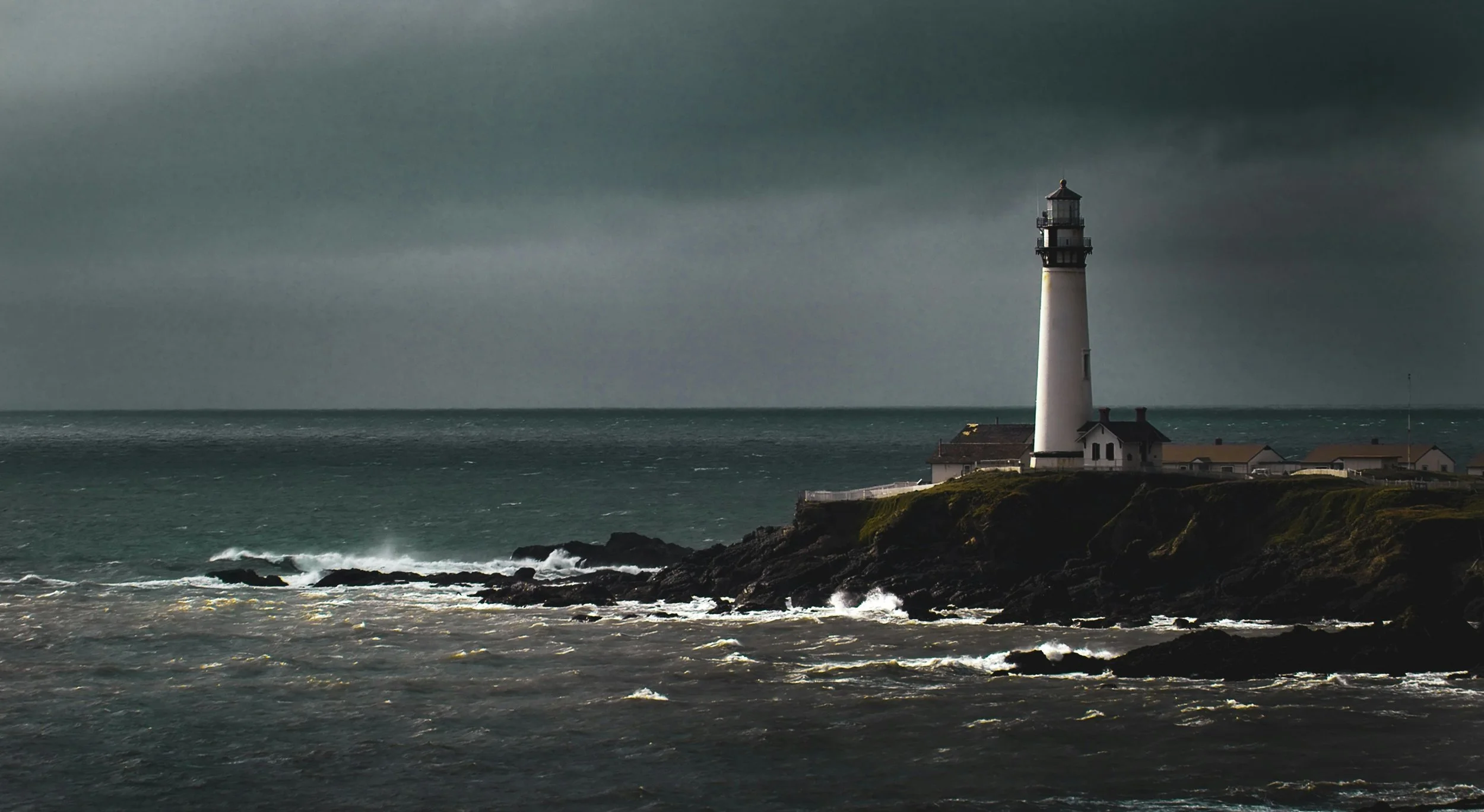
Photo by Daniel Gregoire on Unsplash
To the Lighthouse (1927)
This one is widely considered her masterpiece, and I'm not going to argue with that (although my favourite is Mrs Dalloway and that will never change).
The Ramsays spend their summers on the Isle of Skye. And as in most of her novels, time plays a central role here, almost a character in itself. The book is divided into three parts: the first is a long, sun-filled afternoon. The second compresses ten years into a few pages, told through the gradual decay of the empty house. The third brings the survivors back, older and changed, to finally make the trip to the lighthouse that was promised at the beginning.
The beauty and depth of this novel lives in the lighthouse itself, which means something different to almost every character. For young James, it's a longed-for destination his father keeps denying him. For Mr Ramsay, it's something to do with truth and reality. For Lily Briscoe, the painter who anchors the novel's third section, it's connected to art, to completion, to finally finishing something.
Also pay attention to Mrs Ramsay, one of the most complex and beautifully drawn characters in all of English fiction. Woolf modelled her on her own mother, Julia, who died when she was thirteen.
Orlando (1928)
Orlando is definitely second on my Favourite books by Virginia Woolf list. The structure alone is unlike anything else she wrote, and the themes feel remarkably ahead of their time for a novel published in 1928.
Orlando is a poet who lives for three centuries, starting in Elizabethan England and ending in 1928, and who changes sex halfway through, waking up one morning as a woman without any explanation or apology. Woolf uses Orlando's transformation not as a dramatic plot point but as a lens for examining what changes and what doesn't when you move through the world as a woman rather than a man. The same person, the same memories, the same mind, and yet everything is different.
The Waves (1931)
I have to be completely honest: this is the one I struggled with the most.
The Waves is Virginia Woolf's most experimental novel and the one that asks the most of its reader. Six characters speak in alternating interior monologues from childhood to old age, their voices interspersed with lyrical descriptions of the sea at different times of day. There is almost no conventional plot. What there is instead is pure consciousness, thought, feeling, memory, time passing.
The sea is worth paying attention to as you read. It's not just a structural device but the novel's heartbeat, marking the passage of time and the rhythm of life in a way that prose alone rarely achieves.
A Room of One's Own (1929)
Not a novel, but an absolutely essential read.
Based on two lectures Woolf delivered at Cambridge women's colleges in 1928, A Room of One's Own starts from a simple question: why have there been so few great women writers in history?
A woman must have money and a room of her own if she is to write fiction. That's the central claim. What follows is a tour through libraries, college dining rooms, the British Museum and literary history, tracing the systematic exclusion of women from education, from public life, from the conditions that make creative work possible.
If you read only one thing by Woolf, please, make it this.
Where do you start if you’ve never read Virgina Woolf?
If you're new to Woolf and not sure where to begin, here's a simple guide:
Start with Orlando if you want something playful and immediately engaging.
Start with Mrs Dalloway if you want to go straight to the heart of what makes her extraordinary.
And read A Room of One's Own regardless of where you start. It requires no prior knowledge of her fiction and it will change the way you read everything else.
Whatever you do, don't be intimidated. Her reputation for difficulty is slightly overstated. What her work requires is not intellect so much as attention, a willingness to slow down, follow the thought, and trust where it leads.
